
A BIT BLUNT, PERHAPS: BUT DON’T STAND IN YOUR OWN SHADOW AND THEN COMPLAIN THAT IT’S DARK
A series of self-growth and how to step out of your own shadow

I don’t know you. And maybe you have perfectly good reasons to stand in your own shadow.
Still — it’s inconvenient.
A little more light does everyone good. Light clarifies.
That’s exactly why, as a cultural sociologist, I developed the masterclass “Become More Powerful and Move Forward” together with psychotherapeutic coach Helen Althuizen. The title says it all.
We have three ambitions with this masterclass:
We’ve been close friends for decades and want to enjoy working together.
We want to create initiatives that fascinate us — and from which both we and others can learn.
And yes, we like working in exotic places.
Last month, we delivered seven masterclasses in Bali. Not bad, right?
After Bali, we immediately facilitated another masterclass — this time for community social workers. Closer to home. Less tropical. But no less meaningful. Their evaluations showed a strong impact — and we learned just as much ourselves.
For privacy reasons, we won’t share where the recent sessions took place, nor will we cover all themes here. Instead, I want to highlight two moments that truly moved us.
Because let’s be honest — few people read long posts anymore.

DO IT AFRAID
One of the themes in the masterclass is COURAGE.
We all know James Bond — effortlessly fighting villains on top of moving trains. Adrenaline guaranteed.
But in real life, most of us rarely find ourselves on speeding trains.
So what does courage look like in everyday life?
Maybe it’s this:
“Today didn’t work. Tomorrow I’ll try again.”
Or:
“I’m not competing with Olympic gods. I’m just trying to be slightly better than I was yesterday.”
In the masterclass, we reflect on our own lives. Where were we courageous? Where weren’t we?
One participant shared:
“I used to avoid things because I was afraid. When I realized how much that was limiting me, I decided: Fine. Then I’ll just do it afraid.”
How powerful is that?
That’s stepping out of your own shadow.
THE NEED TO BE UNDERSTOOD
Another theme we explore is: What truly drives you?
Research often identifies eight universal human drivers. We adapted them slightly for our masterclass:
I want to be loved
I want to be understood
I want to be noticed
I want to stay in the background
I want to avoid conflict
I want to help others
I want to be independent
I want to express my anger
We likely recognize all eight. They’re universal.
But usually two stand out.
Which two define you? And why?
Choosing “I want to be loved” reflects a healthy human desire. Yet it can also have a shadow side. If, growing up, love or attention felt scarce, you might become a “love junkie” — a people pleaser, even when it goes against your own interests.
That may not be your story. But exploring it matters.
This masterclass isn’t therapy.
But it does invite honest reflection.
Recently, during a session in the Netherlands, one participant — a community social worker — immediately identified his core driver:
“I want to be understood.”
He is of Moroccan descent and has experienced headwinds in a society where not everyone embraces Moroccans equally.
But there’s more.
Many Moroccan-Dutch youth grow up navigating at least three cultural spheres:
The norms and values at home
Those at school
Those on the street
And today, we can add a fourth:
Online platforms
Composing a coherent identity from these influences is no small task.
For this professional, it resulted in a deep desire to be understood — and equally, to understand others.
Beautiful, isn’t it?
If this resonates with you — perhaps it’s time to step out of your own shadow.
ON LIMITING BELIEFS ABOUT YOURSELF AND STANDING IN YOUR OWN SHADOW:
NOT THE BEST STRATEGY
Recently, I wrote a blog here about people — and yes, that includes all of us from time to time 😊 — who stand in their own shadow and then complain that it’s dark. In that piece, I shared two examples. Since the response was strong, here’s a third.
All examples — and the underlying insights into how people function — come from the masterclass “Become More Powerful and Move Forward,” which I co-facilitate with Helen Althuizen. Helen is an outstanding psychotherapeutic coach who always seeks depth. I am a future-oriented cultural sociologist. Together, we bring decades of professional experience to the table.
We initially delivered this masterclass in Europe. Recently, we were invited to Bali — and we gladly accepted.
In my previous post about the masterclass, we explored what COURAGE means in everyday life (not the James Bond version). One participant shared how she had long felt too afraid to do something bold that required effort. Until she decided to change course and told herself, “Then I’ll just do it scared!”
A powerful act of self-activation.
We also examined what drives people. There are eight universal HUMAN DRIVERS. Which ones dominate differs from person to person — often shaped by childhood experiences. Scratch beneath the surface of any adult, and you’ll often glimpse the child they once were. Reflecting on what truly DRIVES you not only deepens self-awareness; it also helps you better understand others — especially when you realize they may be driven by entirely different forces.
Here is a third insight from the masterclass. Reactions are welcome. If there’s interest, I’ll gladly share more.
LIMITING BELIEFS ABOUT YOURSELF
Within your self-image often lie convictions that keep you smaller than you could actually be. We call these limiting beliefs. Becoming aware of them is essential — because awareness creates the possibility to reframe them.
Here are four common ones.
1. The Love Junkie
The love junkie craves attention, admiration, and recognition. There is nothing inherently wrong with this — the desire is universal. But when it becomes overwhelming, dependency develops: a person who no longer feels capable of standing firmly on their own — or forgets the strength of doing so.

2. The Fanatical Perfectionist
The limiting belief here is: I am never good enough.
No matter what I do, it falls short. As a person, I am not sufficient.
The perfectionist believes it is never enough — regardless of the achievement.

3. The Catastrophic Thinker
The catastrophic thinker assumes the worst-case scenario will always materialize. Every mosquito becomes an elephant. If a manager unexpectedly asks for a meeting, the immediate assumption is dismissal — rarely a compliment or new opportunity.

4. The Low-Frustration-Tolerance Personality
This personality struggles to tolerate discomfort and quickly becomes angry. The underlying belief: the world should function smoothly and effortlessly. When it doesn’t, frustration or anger follows. Unfortunately, life is not always easy. People do not automatically meet your expectations. Assuming they should is, in itself, a limiting belief.

PRACTICAL TOOLS FOR CHANGE
For anyone willing to face and acknowledge their limiting beliefs, there are ways to soften or overcome them:
The love junkie benefits from activities that are not centered around external approval, but around personal growth or experience — sports, meditation, or simply doing something energizing without an audience.
The fanatical perfectionist should consciously celebrate every completed achievement as a success. Apparently, I am good enough.
The catastrophic thinker gains from systematically reflecting on what is going well. Making a written list of positive events helps relativize imagined disasters.
The low-frustration-tolerance personality can practice helpful self-talk.
Instead of:
“Why do I always end up in traffic?”
Try:
“There are millions of cars on the road. Traffic happens. Annoying — yes. A catastrophe — no.”
Are you standing in your own shadow?
Maybe it’s time to take one step sideways.
The light is already there.
HOW ONE HOUR OF COACHING CAN HELP
When You’re Too Exhausted to Meet Your Deadlines
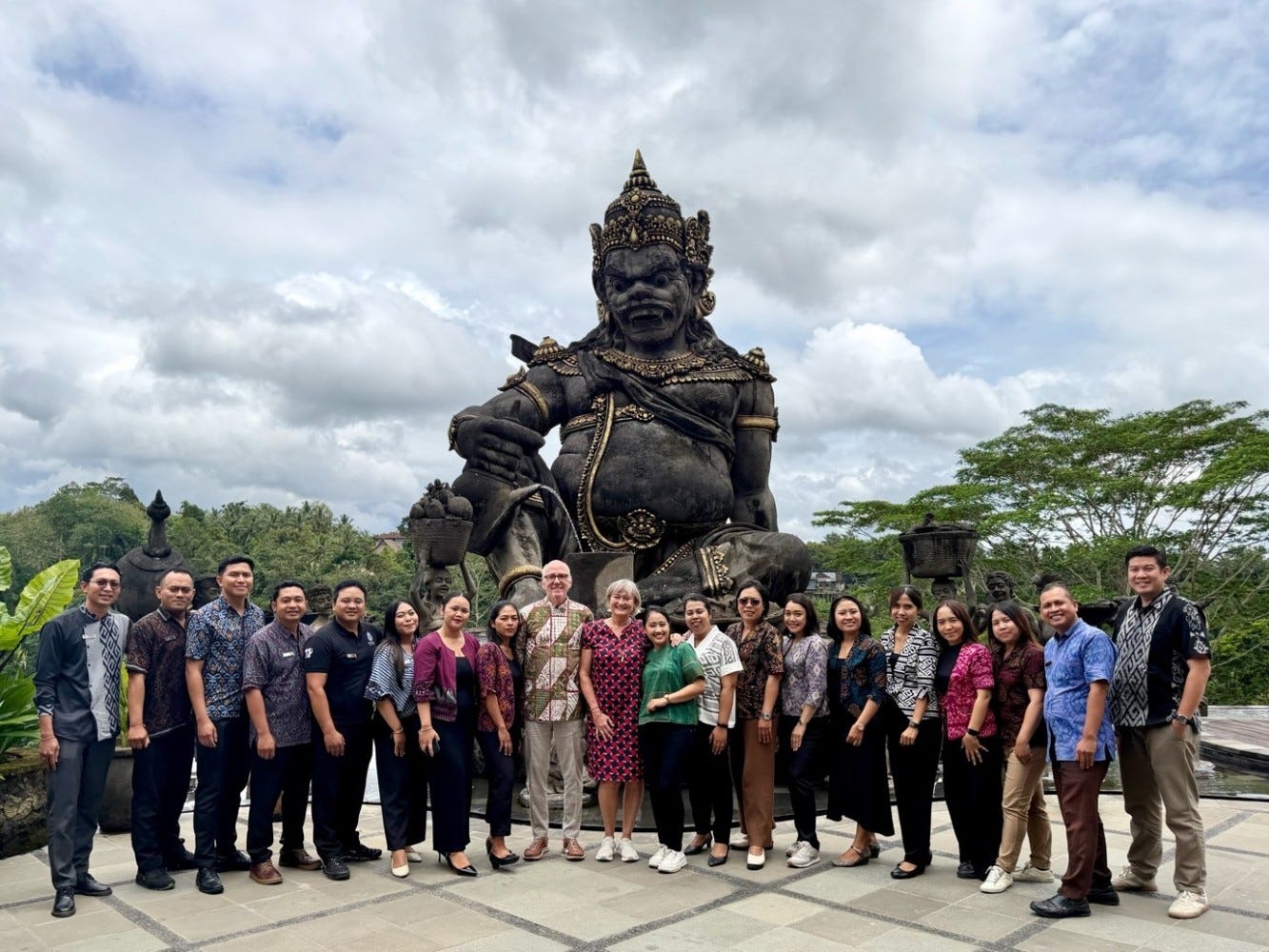
We first launched the program in the Netherlands, later in Spain, and most recently in Bali (not a bad place to work 😊).
The first two blogs explored the substantive themes of the masterclass:
How do you define courage?
What are your ultimate drivers?
Which limiting beliefs about yourself — conscious or unconscious — might be holding you back?
A regular part of the masterclass is a one-on-one consultation with Helen. Occasionally, I ask whether I may sit in — purely to learn how a professional psychotherapeutic coach conducts such a conversation.
Recently, we delivered the masterclass at a Swiss business school for a group of international students. One of them, a young woman from India, requested a private consultation. Since I knew her from a different educational context, I asked if I could be present. She kindly agreed.
This is what I learned.
Deadline Coaching
Let’s call her Aarna. That is not her real name — and the university is anonymized as well. Privacy matters.
Aarna entered the room almost in tears. She had been given eight weeks to write her business plan. After four weeks, she hadn’t written a single word.
My instinctive thought was simple: Then you’ll have to work twice as hard in the remaining four weeks.
But I stayed silent. The coach was in charge. I was there to observe.
Helen struck a very different chord. Calm. Empathic. Direct.
“That must feel very frustrating,” she said.
Then she asked:
“Why can’t you get started? Why is your energy so low? Is something draining you — and if so, what is it?”
Aarna knew immediately.
Her mother — whom she loves dearly.
Her mother wanted to have long phone conversations every single day with her daughter studying abroad. A sign of a loving bond — and that bond certainly existed. Aarna never doubted that.
But the daily calls were long. And they never ended well.
If Aarna mentioned any difficulty, her mother would become deeply anxious — almost panicked across continents — and it would take Aarna a long time to calm her down.
But if Aarna said she was doing well and feeling happy, the conversation would also take a problematic turn:
“How can you be happy when your mother is so far away?”
For the coach, for Aarna, and for me, the energy drain was suddenly crystal clear.
“Could you simply tell your mother you’re busy and need to call less?” Helen asked.
The answer came instantly.
Of course not. Aarna loves her mother. And such directness would be culturally inappropriate in India.
Helen continued:
“Then can we find wording together — something that leads to fewer calls, but is still fully respectful and acceptable for your mother?”
The solution came surprisingly quickly.
“Maa, we don’t have to speak every single day. Our bond is unbreakable and forever. It doesn’t need daily calls.”
Her mother was touched. She heard the affirmation of love. The reassurance.
The calls became less frequent.
And some time later, Aarna let us know: her business plan was finished. On time.
The Lesson For Me
For me, this was a simple yet powerful example of how therapeutic coaching can work — sometimes with striking speed.
It also made something else very clear to me:
I am a future-oriented cultural sociologist.
And not a psychotherapeutic coach.
Long piece, I admit. But it captures our three-months work on the masterclass - and some of its result. CR