
AGENTIC AI WILL REVOLUTIONIZE YOUR BUSINESS
FOR SURE AND FASTER THAN YOU THINK

AI often fuels chatbots. The results can be everything between benignly smooth & helpful and utterly frustrating.
MAY I CALL IT TRADITIONAL AI?
Because the next step is rapidly developing. It’s the rise of Agentic AI – buzz word in 2025, now establishing itself. Inextricably and intrinsically, Agentic AI is supported by Big Tech players like OpenAI, Google, Anthropic. But on their shoulders, we see a kaleidoscope of startups building AI for specific sectors, like ours.
Some names? Freeletics. Zing coach. Amp. Volt Athletics. Universal Practice. Galen AI. Ellipsis Health. Hopicratic AI. Royo App. Blocktech Brew. PulseAI Labs. I am exploring the field – and can use your help. Bur restrict myself here and focus in the main topic.
So, what is Agentic AI

Think of it as an AI-system that can ACT AUTONOMOUSLY TOWARDS GOALS rather than just respond to prompts.
A normal fitness app, fueled by ‘traditional’ AI will log your workouts. It also will answer a lot of questions when asked. Agentic AI behaves more of LIKE A DIGITAL ASSISTANT WITH INITIATIVE – not a chatbot. It is capable of setting sub-goals for workouts, learning broader & deeper from feedback, adapting strategies over time.
An Agentic AI system notices you’re skipping leg day, adjusts your weekly plan, reschedules sessions, and sends recovery suggestions automatically.
“You haven’t trained legs in ten days. Want me to book a 45-minutes strength session tomorrow at 6pm?” You can mention this marketing automation – nothing wrong with that. But you can also call it behavioral intervention.
When done properly it will feel like caring with the right attention. I will feel like organic, even human, devotion.
Especially so, when harmoniously aligned with all data you have been willing to share with your Agentic AI. That might be more problematic than it sounds, because how many private data are people to trade in for deeply personalized answers.
Here some examples of:
Perfectly answerable & perfectly personalized questions for Agentic AI:
On performance optimalization:
“Based on my last 6 workouts, am I undertraining or overtraining?”
“Why has my bench press plateaued even though my volume increased?
“What is the optimal split for my recovery profile and schedule constraints?”
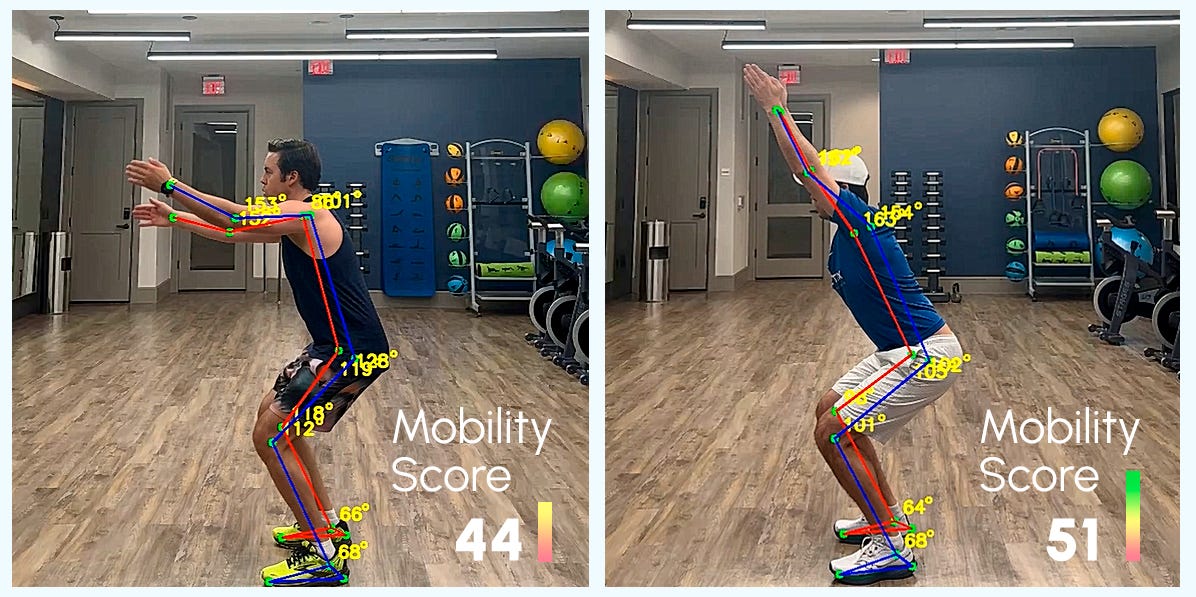
On biomechanics:
“Why does my lower back fatigue before my hamstrings during RDLs?”
“Is my squat depth limiting quad growth?”
“Based on my limb proportions, should I use high-bar or low-bar squats?
“Given my genetics and current body comp, what’s a realistic 6-month muscle gain target?”
On recovery and readiness intelligence – with next-level integration of wearables and behavioral patterns:
“Should I train hard today or focus on mobility?”
“Why am I feeling more fatigued despite sleeping 7 hours?”
“How is my stress level affecting my muscle growth?”
“Is my soreness normal or a sign of overreaching?”
On hyper-personalized nutrition questions:
“Should I increase carbs based on my recent training intensity?”
“Why am I not losing fat even though I’m in a calorie deficit?”
“Is my protein intake sufficient for my lean mass?”
“How should I adjust nutrition for travel this week?”
“What micronutrients might I be deficient in based on energy dips?”
On longevity & healthspan Intelligence -(especially for 30+ gym members):
“Is my current training helping or harming long-term joint health?”
“How can I optimize strength training for longevity rather than aesthetics?”
“What cardiovascular zone should I train in to improve VO2 max?”
“Am I building muscle in a way that protects against metabolic decline?”
On behavioral & psychological coaching – Agentic AI as a tool for transformation:
“Why do I keep skipping workouts on Thursdays?”
“What habit is most limiting my progress?”
“When am I most consistent and how can we design around that?”
“Am I setting unrealistic goals based on my lifestyle?”
“What psychological pattern is causing my bulk-cut cycles?”
On identity-level questions – call it the highest tier, going beyond surface fitness:
“Does my training align with my long-term life goals?”
“How can fitness better support my career performance?”
“What would an optimal year of training look like for my lifestyle?”
There are more example questions to formulate, of course. On context-aware gym floor questions (what equipment will be free when). On injury-aware intelligence. On identity level: “What kind of athlete am I becoming?”
But you’ve got the future picture by now
Instead of static programs, Agentic AI can will track workout performance from the well-known wearables. It will detect training plateaus. It will adjust volume, intensity, and recovery automatically. It will align plans with your real-world schedule.
Agentic AI will, in no time, become a Dynamic Performance Coach.
Far Fetched?
Maybe. Agentic AI works most efficiently and effectively, as fully autonomous assistants. Executing on all that you are asking.
Like: look something up on the internet and summarize it for me. Like: Help someone understand the essence of the long email I’ve sent.
Like: Book a particular hotel room for me, negotiate a discount and arrange a PT for a Thursday evening.
This though implies that Agentic AI assistants need access to everything on your devices. Including payment details. Can we really be sure that agents are completely reliable? Do we feel confident that the decisions they design are always made with our best interest at heart, and not the interest of the company that built them?
Many people won’t easily feel comfortable with that. But there will be early adopters – where and how many is the question.
These are solid questions. Nevertheless: the die has cast. With the most powerful companies in the world behind it: from Amazon to OpenAI, from Baidu to Huawei. They have managed to seduce us in the past.
For better and for worse.
Agree. But AI implies the potential of impressive right-time, right-place, right-mood personalization. Thanks. CR
Agentic AI could turn fitness apps into true performance partners instead of dashboards. The potential is huge. The only challenge will be balancing personalization and privacy, and privacy for a lof of people is really important..