
Predicting Health Before You Feel It: The End of the Gym Era
THE FUTURE OF HEALTH & FITNESS: THE 360° / 24/7/365 EMBRACE

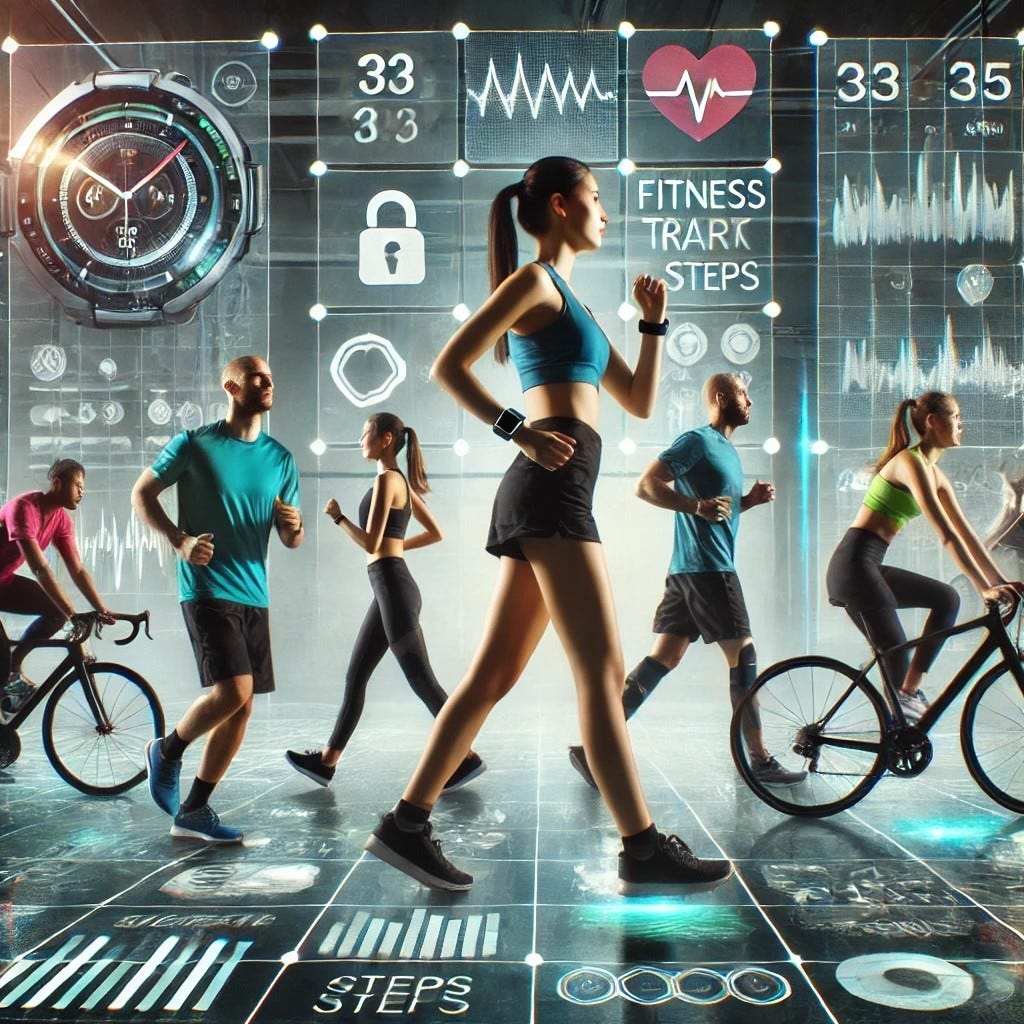
Thanks for reading Science of the Time Substack! Subscribe for free to receive new posts and support my work.The future of health and fitness will, to a large extent, be shaped by the ongoing data-driven monitoring revolution. Increasingly, countless data points from our daily lives are being collected, analyzed, and fed back to us through highly personalized, 360-degree behavioral systems—covering exercise, nutrition, sleep, and stress management. Undoubtedly, more dimensions will soon appear on our collective horizon.
It’s not only about a 360-degree embrace. It’s equally about 24/7/365.
This visionary path to the future shines more brightly now than ever before, fueled by rapidly advancing and intensifying technologies. Call it the Rise of the Big Arena. Call it Tracking & Monitoring AI. Or, more pragmatically, call it The Fall of the Gym Walls.
I recently spoke about this trend at Dubai Active, and was encouraged by how many professionals recognized this trajectory—and confirmed that their organizations are already moving in that direction. I will be interviewing several of them soon about this 360°, 24/7/365 vision: the intertwined paths leading toward it, the estimated timelines, the balance between urgency and caution, and of course—how this future might actually look.
Here’s what I’ve learned so far about this unfolding future:
The Data-Driven Health Revolution — in Three Phases
Phase 1 (2025–2030): Integration & Expansion
Expect continuous monitoring to expand beyond wearables into smart clothing, bathroom sensors, and—eventually—implantables. Consumer-focused AI agents will begin integrating insights across fitness, diet, sleep, and stress. Toward 2030, behavioral digital twins will emerge: virtual models that simulate your body’s responses to exercise, nutrition, and stress.
Phase 2 (2030–2035): Precision Feedback Loops
This is the phase of intelligent health ecosystems. Nutrition apps, genetic data, microbiome insights, and emotional states will all feed into adaptive AI coaches or agents—some human, others purely digital. Personalized interventions will become proactive, anticipating issues before symptoms arise.
At present, Apple Health, Garmin, Oura, WHOOP, MyZone, and Fitbit don’t communicate effectively. Expect interoperability standards to emerge, similar to those in open banking. Without them, holistic feedback loops will remain incomplete. Consumers, however, will demand this integration—and migrate toward those who deliver it.
Phase 3 (2035–2045): Embedded Health Ecosystems
Monitoring will become ambient, invisible, and omnipresent. Think skin patches, ingestibles, and neural wearables. Behavioral regimes will adjust continuously based on predictive biometrics. Health will evolve from a reactive pursuit to a managed, adaptive flow.
Obstacles Ahead
Naturally, obstacles will arise. Privacy and trust top the list. Many will hesitate to let governments or insurers monitor their bodies and emotions. Regulation will be necessary—and complex. Expect the emergence of privacy tiers and standardized operational frameworks to reduce today’s fragmented ecosystem.
Equally important will be the cultural and psychological challenges. Call it algorithmic health anxiety. Some will resist the idea of submitting to opaque, algorithmic systems—while others may feel overwhelmed by incessant feedback, risking obsession or dependency. We will need emotionally intelligent design—feedback that motivates rather than punishes.
Toward a New Definition of Health
Across all three phases, individuals and societies will be prompted to redefine health itself: expanding from the physical to the mental, from the mental to the spiritual, from performance to purpose. It will include emotional resilience, social connection, environmental quality—even the air we breathe.
This vision moves far beyond traditional fitness. It represents the disruptive yet compelling architecture of the road toward our shared future.